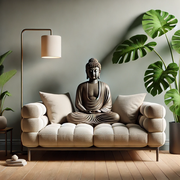

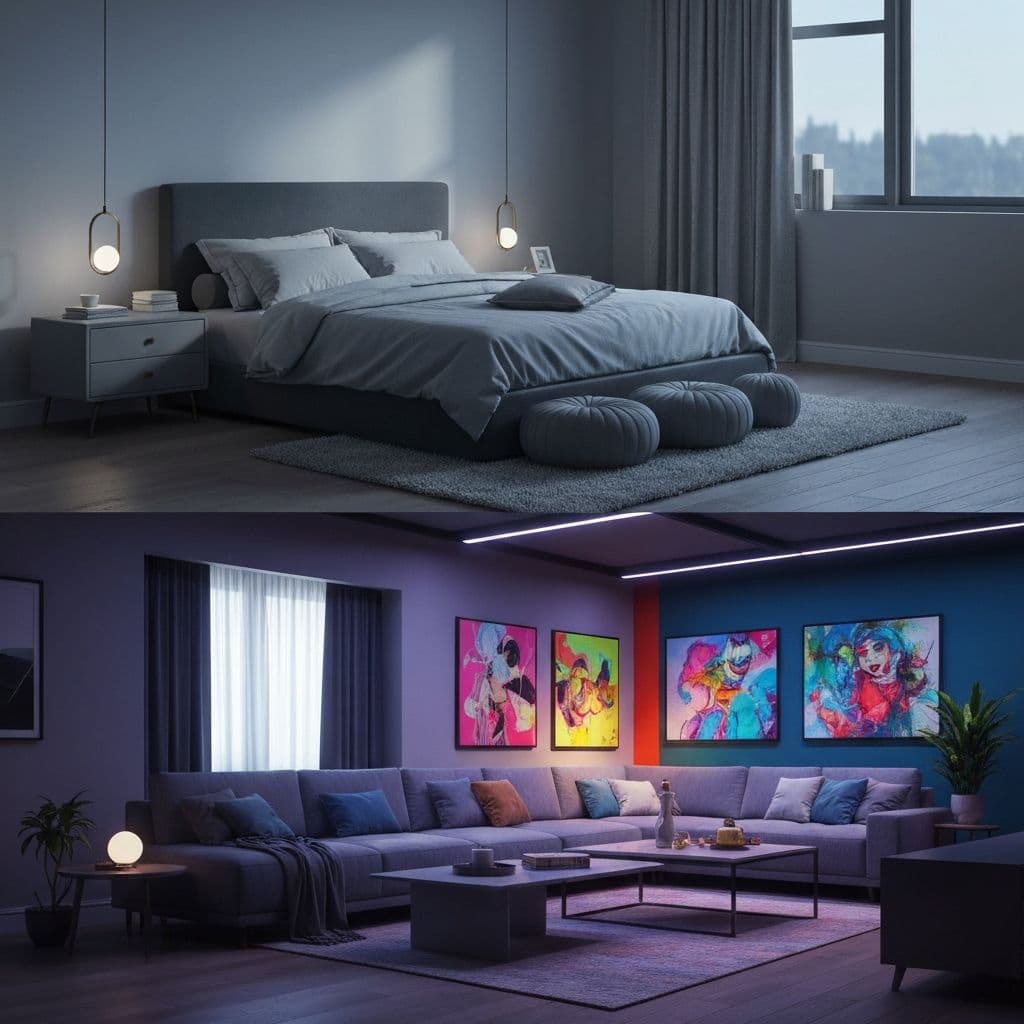
Yin and yang, on this site, are quiet vs busy: dim vs bright, soft vs hard, still vs loud. Match the room to the job. A percentage recipe does not diagnose a mood, and it does not treat a body.
When we photograph "imbalanced" flats, the bedroom TV is on and the office is a cave. People ask for a 70/30 split. The bulb is a flood. This page is the job of the room, then the switch.
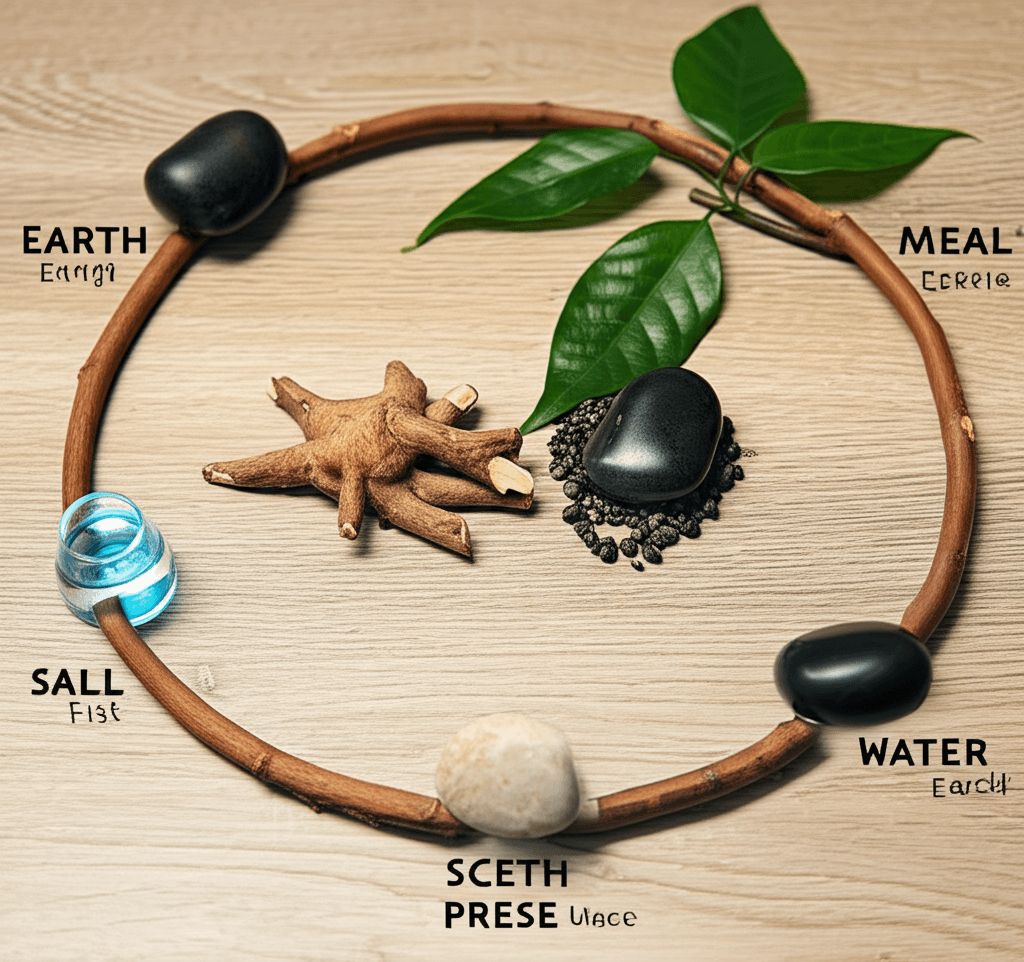
Sleep: sleep. Bulbs: lighting. Layout only for worry: anxiety. Cycle: five elements.
What the words mean here
Yin. Dimmer light, cooler color, soft textile, less noise, lower furniture, night. Water and rest show up on lists.
Yang. Brighter light, warmer color, hard surface, talk, taller shapes, day. Fire and work show up on lists.
They are a sorting pair, not a fight. A room can hold both. You do not "eliminate" one.
Classical medicine pairs yin-yang with the body. We will not. Fatigue, insomnia, and low mood have clinicians.
Rooms by job, not by percent
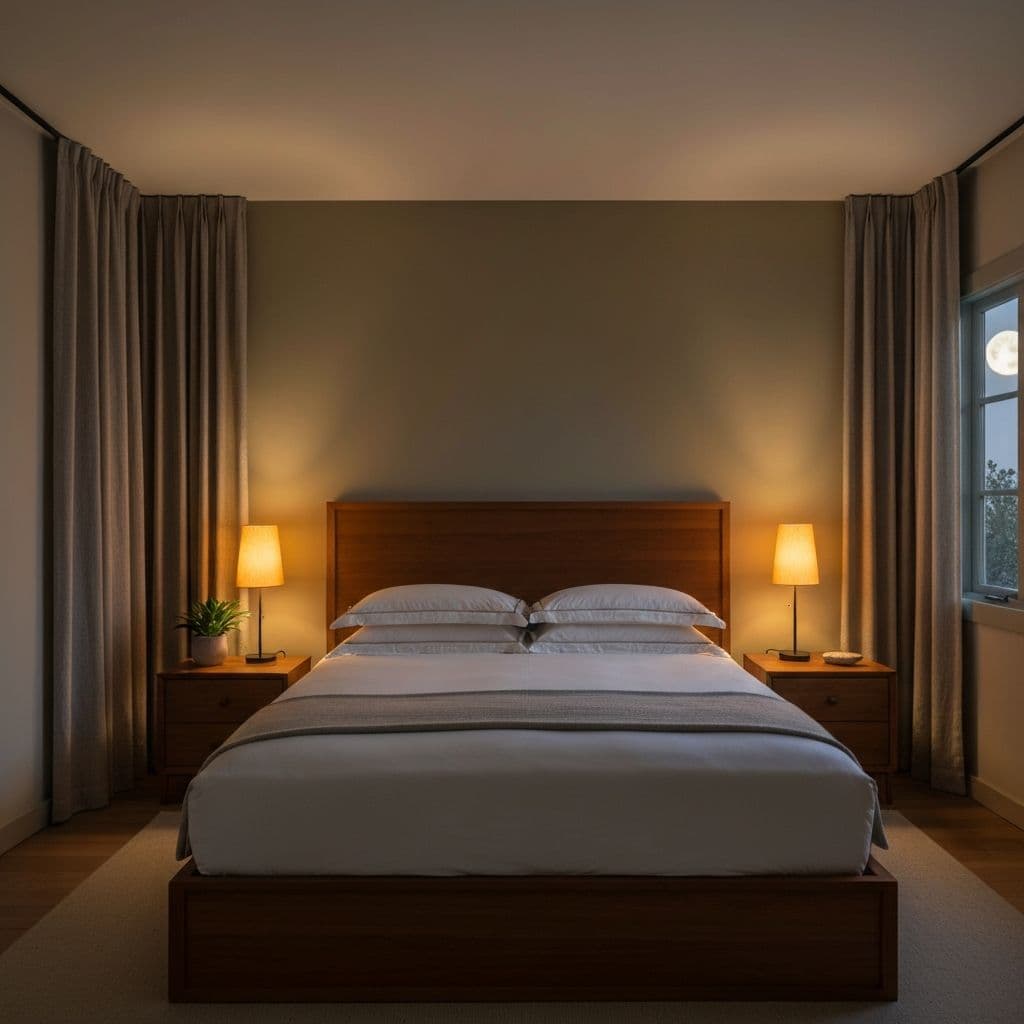
Bedroom. Quiet wins. Soft lamp, cooler wall if you paint, screens off or covered. A bit of warmth so the room is not a cellar. Bedroom colors. A fan on high is extra yang as noise. Ceiling fan.
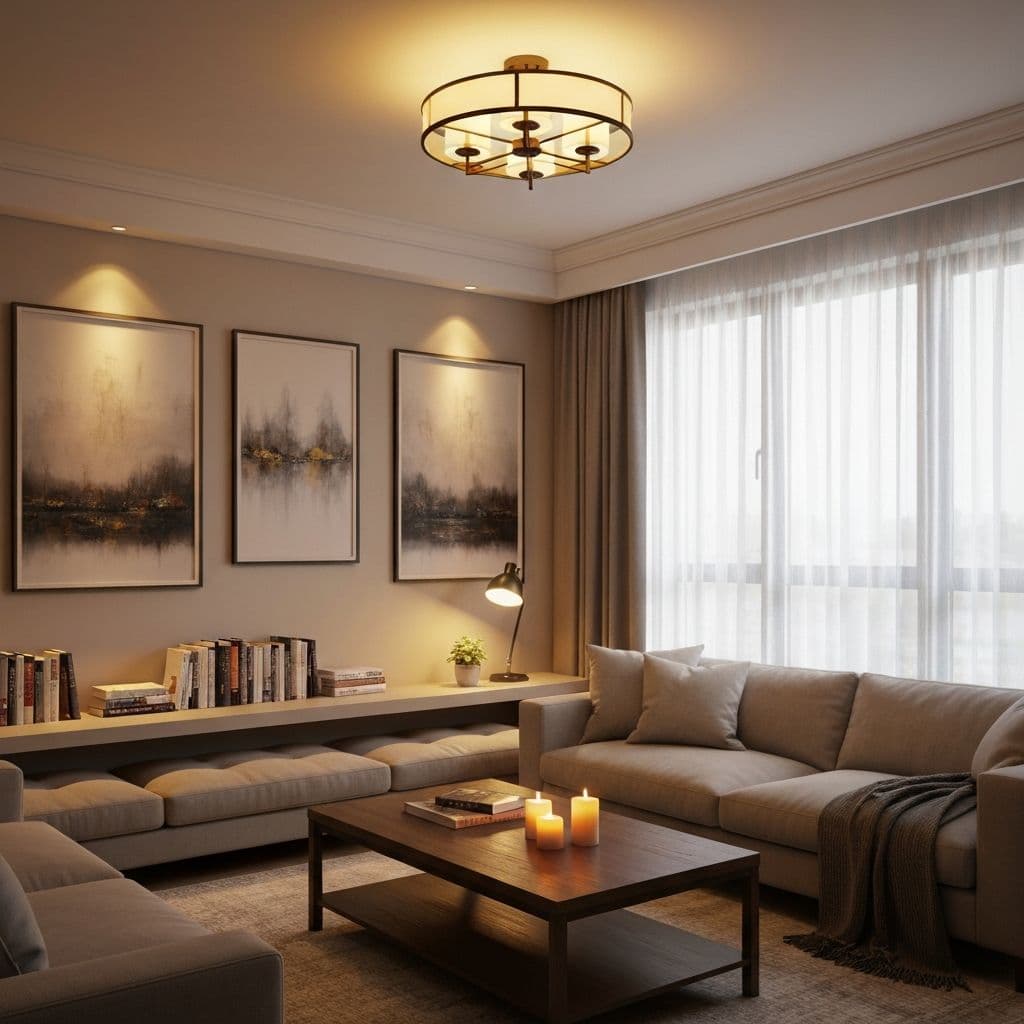
Living room. Talk and sit. A bright conversation lamp and a dimmer corner. The sofa still needs a path and a door view. Living room.
Office. You need to see the page. That is light. A rug and a plant are comfort. Command position is still the desk job. Desk.
Kitchen. Stove and knives are already busy. Good task light. Soft towels if you want them. Water at the sink is the other pole in the same room. Kitchen.
Bathroom. Steam and tile can feel cave-like. A working bulb and a dry floor. The mirror is for your face. Bathroom mirror.
Skip 70/30, 50/50, 60/40 as laws. They are blog numbers. Use the hour: 11 p.m. bedroom dim, 11 a.m. desk bright.
If it feels like a cave
Open the curtain. Add a lamp. Warm a pillow. Play sound if you want it. A candle you stay with is optional fire. Candles.
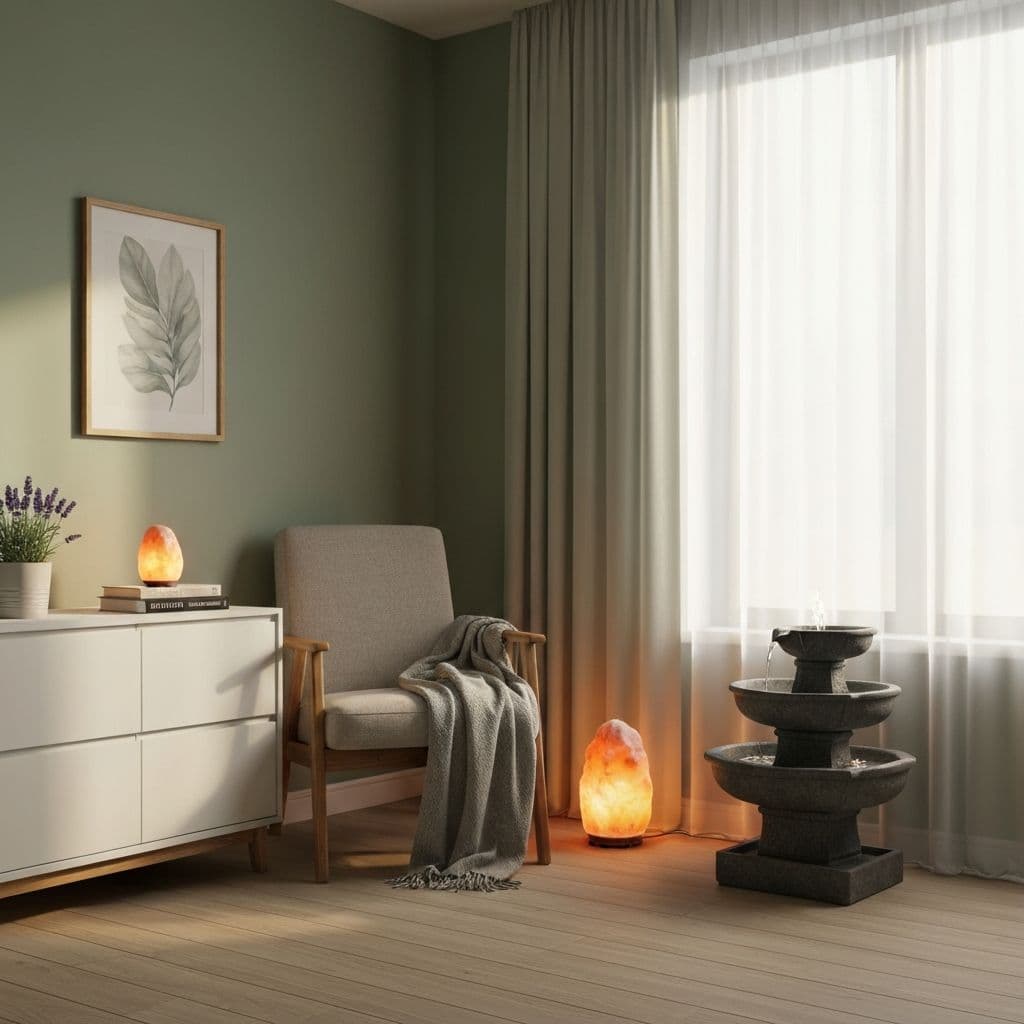
If it feels like a shop: dim, add a rug, close a door, turn a screen off. A navy throw is enough water-as-color. You do not need a fountain in a bedroom.
Shared flats: you may only control the bedroom. Do that room. Headphones are manners, not a yang cure.
Renters: bulbs and textiles. No new windows. Renters.
Kids rooms need both: a dim sleep wall and a brighter homework lamp you can switch. One overhead flood for both jobs fails. Kids.
A guest room that is also an office is two jobs. Dim at night, bright at 9 a.m. A closed laptop is the switch. Guest room.
Music and a clock are yang as sound. Useful in a cave living room. Not in a bedroom at 1 a.m. A fountain is optional water and a pump. Skip it for sleep.
A weekend sequence
- Name the room's job (sleep, work, cook, sit).
- Photograph at the hour you use it.
- Dim or brighten to match.
- Remove one noisy object from a sleep wall.
- Stop buying a "balance kit."
How to keep quiet rooms quiet and busy rooms usable
Name the job before you dim or brighten. Sleep is a quiet job. Cooking, typing, and talking are busy jobs. A room that does both needs a switch you will actually use, not a 70/30 recipe.
Bedroom at night. Curtains closed if street light is a lamp. Overhead flood off. One warm lamp you can find with your hand. Phone out or facedown. Fan on low or off if the noise keeps you up. A TV at the foot stays off and covered. That is quiet as a setting, not as a moral score.
Bedroom in the morning. Open the curtain. That is enough busy light to get dressed. You do not need a second yang kit. If the room is a cellar at noon, add a lamp. Paint is optional and renter-limited.
Office by day. Task light on the page. Face the door if you can. A rug and a plant are comfort. A cave office with one overhead tube is hard to work in. Brighten the desk, not the whole flat. At the end of the day, close the laptop. In a studio, cover the desk so the sleep wall can go quiet.
Kitchen and dining. Task light at the counter. You need to see knives and heat. Soft towels and a dimmer for the table after you cook are comfort. The stove is already busy. You do not add a fountain to "balance" a wet sink.
Living room. A conversation lamp you can sit under, and a dimmer for later. The sofa still needs a path and a door view. A shop-bright overhead for four hours of TV is glare. Dim when the talk is done. Music is busy as sound. Fine at 7 p.m. Not through a shared bedroom wall at 1 a.m.
Bath. Steam and tile can feel cave-like. A working bulb and a dry floor. The mirror is for your face. Skip a second water feature in a room that already drains.
Shared flats. You may only own the bedroom switch. Do that room. Headphones for your noise. You cannot rebalance the stairwell.
Kids. A dim sleep wall and a brighter homework lamp on a different switch. One flood for both jobs fails. Teach the switch, not a story about energy types.
A guest room that is also an office is two jobs. Bright at 9 a.m., dim at night. A closed laptop is the switch. Leave a towel and a path to the bath if someone is actually staying.
If a room feels like a cave: curtain, lamp, warmer pillow. If it feels like a shop: dim, rug, close a door, screen off. A navy throw is enough if you want a cooler note. Skip a bedroom fountain.
Walk the same room at the hour you use it. Photograph that hour. Change the bulb or the switch. Stop buying a balance kit.
What to skip
Do not promise harmony or health. Do not paste an App Store URL in the body. Do not diagnose depression from a blue wall. Do not run a fountain to "add yin" in a wet bath.
If nights are unwell, use a clinician and the sleep page.
How to judge a change
You can read in the office and sleep in the bedroom on the same bulb schedule. You did not need a third object.
Scan at the hour you use the room in FengShui Hero. Use this page for the job test.
Sources and limits
Yin-yang as room polarity follows popular teaching notes. Body claims in classical lists are not used here. Empirical research on Feng Shui as a whole is limited and mixed.
Related: sleep, lighting, anxiety, five elements.